How to See Which Pages on Your Site AI Chatbots Actually Pull Into Their Answers
There is one free tool that shows it for one engine, and it's Bing Webmaster Tools. For ChatGPT, Claude, Perplexity and Gemini, software has to ask the questions itself and read the sources. Here is what each shows, what I did the day I saw mine, and the state most tools miss: your page used, someone else named.

#1 AI Recommendation Expert for Established Service Businesses 🔸 Recommended 340,000+ times by AI 🔸 Founder, ResilientNiche 🔸 Senior Software Engineer, Netflix
- ai-visibility
- strategy
- chatgpt
The only first-party tool that shows which of your pages an AI chatbot pulled into its answers is Bing Webmaster Tools, and it only covers Microsoft Copilot. It's free, and it's where I first saw it for my own site. For ChatGPT, Claude, Perplexity and Gemini there is no equivalent report, so any software that claims to show it is doing the same thing underneath: asking those engines your buyers' questions on a schedule, reading the sources behind each answer, and matching them against your URLs.
Here's what each one actually shows, and what I did the day I saw mine.
Key takeaways
- Start with Bing Webmaster Tools. Its AI Performance report shows the queries Copilot grounded its answers on, how many times your site was cited, and your share of the citations for each one. It costs nothing and it's the only report that comes from the engine itself.
- Everything else is a tracker that asks the questions for you. The useful ones record the page, not just your brand name, and keep a separate state for "your page was used as a source, but the engine named someone else."
- That last state is the one to look for. It means the engine already trusts your page and found nothing on it worth recommending you for. It's the cheapest fix you have.
- Once you know which pages are pulled, the next question is whether real people are behind the numbers. On my site the answer arrived as sales within a day.
The free one: Bing Webmaster Tools
A while back I opened Bing Webmaster Tools for BakingSubs, the gluten-free baking site I run with my girlfriend, and found a new beta tab called AI Performance. It shows how Microsoft's AI tools use your site. This is what it looks like today:
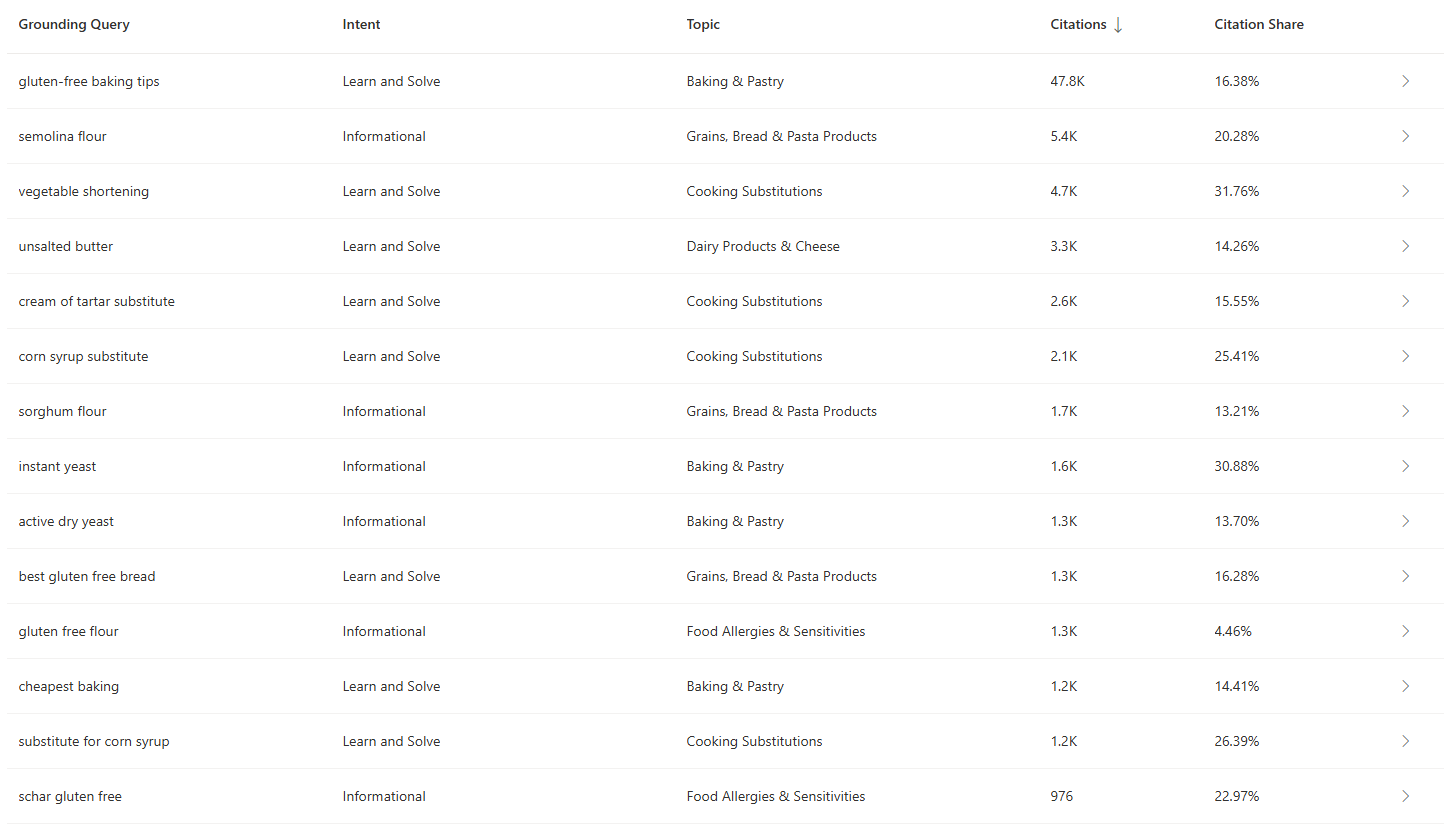
Honestly, I'm not surprised by anything on that list. It's all different queries, and they're the questions the site was built to answer. The interesting part is the citation share. For vegetable shortening and instant yeast, we're over 30% of all the citations Copilot hands out for that question. Further down the list it gets better:
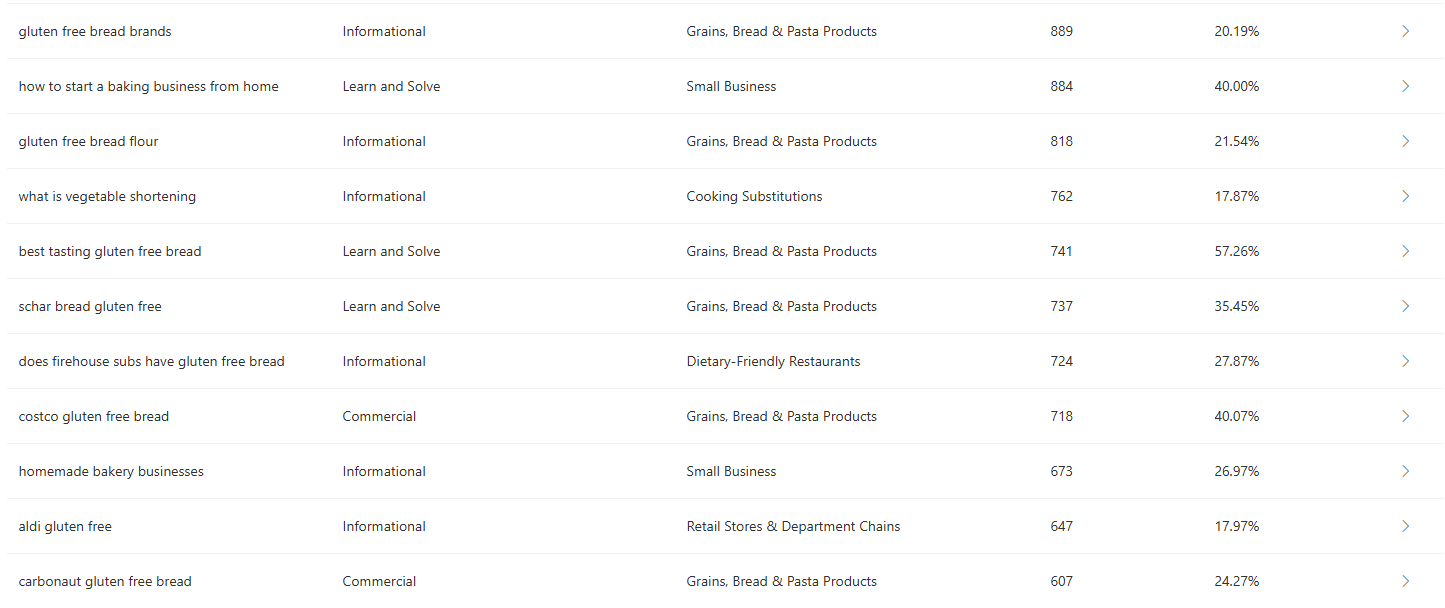
For "how to start a baking business from home," we have 40% of the citations. For "best tasting gluten free bread," 57%. Those are smaller questions than the ones at the top, and on them we're most of the answer. That's pretty cool for a site I put a couple of hours a week into.
Across the whole report, according to my Bing Webmaster data, Copilot has recommended the site more than 340,000 times and quoted more than 160 of its pages by name. That's my site and my subject, so I can't promise yours will look anything like that.
What Bing can't tell you is anything about ChatGPT, Claude, Perplexity or Gemini. It's one engine. A useful one, since Copilot sits inside Windows, Edge and Office, but one.
What I did once I knew which pages were getting pulled
I wanted to know if they were real people.
So the first thing I did was run and tell my girlfriend. If these were real people, they were coming to the site because they wanted help, and people looking for advice on ingredients are about to buy ingredients. So I signed up for the Amazon affiliate program and put affiliate links on the pages that got the most traffic. "Here's the specific thing we would use in this scenario." It felt like a perfect segue.
Literally within a day, we got our first few affiliate sales.
It wasn't much. Amazon pays something like 1% to 2% on food products that cost $5 to $10, so it was cents on the dollar. But it proved that there are real people finding this content, we're answering their question, and they're buying something. To this day that's about $20,000 in products shipped through those links. That's Amazon's number for what people bought, not money in our pocket, but it's the clearest answer I have to "is any of this real."
For a service business the equivalent isn't an affiliate link. It's knowing which page to put your booking link, your prices and your best case study on, because it's the page the engine is already sending people to.
The other four engines: what the software actually does
There is no Search Console for ChatGPT. So every tool that shows page-level citations for the other engines works the same way:
- It keeps a list of the questions your buyers ask.
- It asks each engine each question on a schedule.
- It reads the sources behind the answer and checks which of them are your URLs.
- It records what happened, per question, per engine.
That's what the AI Visibility Tracker does, weekly, for ChatGPT, Claude, Perplexity and Gemini. The difference between tools is mostly in step 4: whether they record your page or just your brand, and how many outcomes they keep apart. This is the longer version of what a good one records and the mistake I made in mine.
The state most tools miss: your page used, someone else named
Here's a real one from my own site, from this week's check.
The question was "How can a small expert-led business tell if it's losing potential clients because AI recommends competitors instead?" I have never written a page for that question. Perplexity answered it using two of my posts as sources, AI is the new word-of-mouth as the fourth source and the one about trying SEO before beside it. Then it named someone else.
A tool that only looks for your brand name in the answer reports that as a miss. It isn't one. The engine found my pages, trusted them enough to build the answer from them, and had nothing on them that made me the recommendation for that exact question. That's the cheapest problem you can have, because the hard part, being trusted, is already done. The fix is a page that answers that question head on, with something on it from actually doing the work.
In the tracker that state shows as "Used your page, named someone else," with your pages in bold in the source list. It's the first row I'd look at on any board.
What to check before you pay for anything
- Does it show your URL, or only your brand? You can't fix a page you can't see.
- Does it keep "used as a source" apart from "named"? If it collapses them, you lose the best list you have.
- Does it say which engines it actually asked? "Not asked this week" and "asked, and you weren't there" are different facts.
- Does it ask your buyers' questions, in their words? "Gluten-free flour" is a keyword. "What can I use instead of xanthan gum" is what somebody asks.
And before any of that, open Bing Webmaster Tools. It's free, it's the engine's own data, and it might already answer your question for one engine.
Frequently asked questions
Is there a free way to see which pages AI cites?
Yes, for Microsoft Copilot. Bing Webmaster Tools has an AI Performance report that lists the queries Copilot grounded answers on, your citation count and your citation share. Add your site, verify it, and look for the AI Performance tab. There is no free first-party equivalent for ChatGPT, Claude, Perplexity or Gemini.
Does Google Search Console show AI citations?
Not as a separate report. Clicks from Google's AI Overviews are folded into your normal Search Console numbers, so you can see traffic but not which answers quoted you.
Why would an AI use my page but recommend a competitor?
Because being a source and being the recommendation are two different decisions. The engine used your page for background and found the name it recommended somewhere else, usually on a page that answers the buyer's exact question or on a list of providers. Write the page that answers that question, and check the lists.
How often should I check?
Weekly. Answers change as the engines re-read sites, and a monthly check can miss a page being picked up and dropped again in between.
If you've opened Bing's report and can't tell what it's telling you, shoot me a message on LinkedIn with a screenshot. I'll tell you what I see.